Column miracle with a green soul Lublin Metropolitan Railway Station (PL)
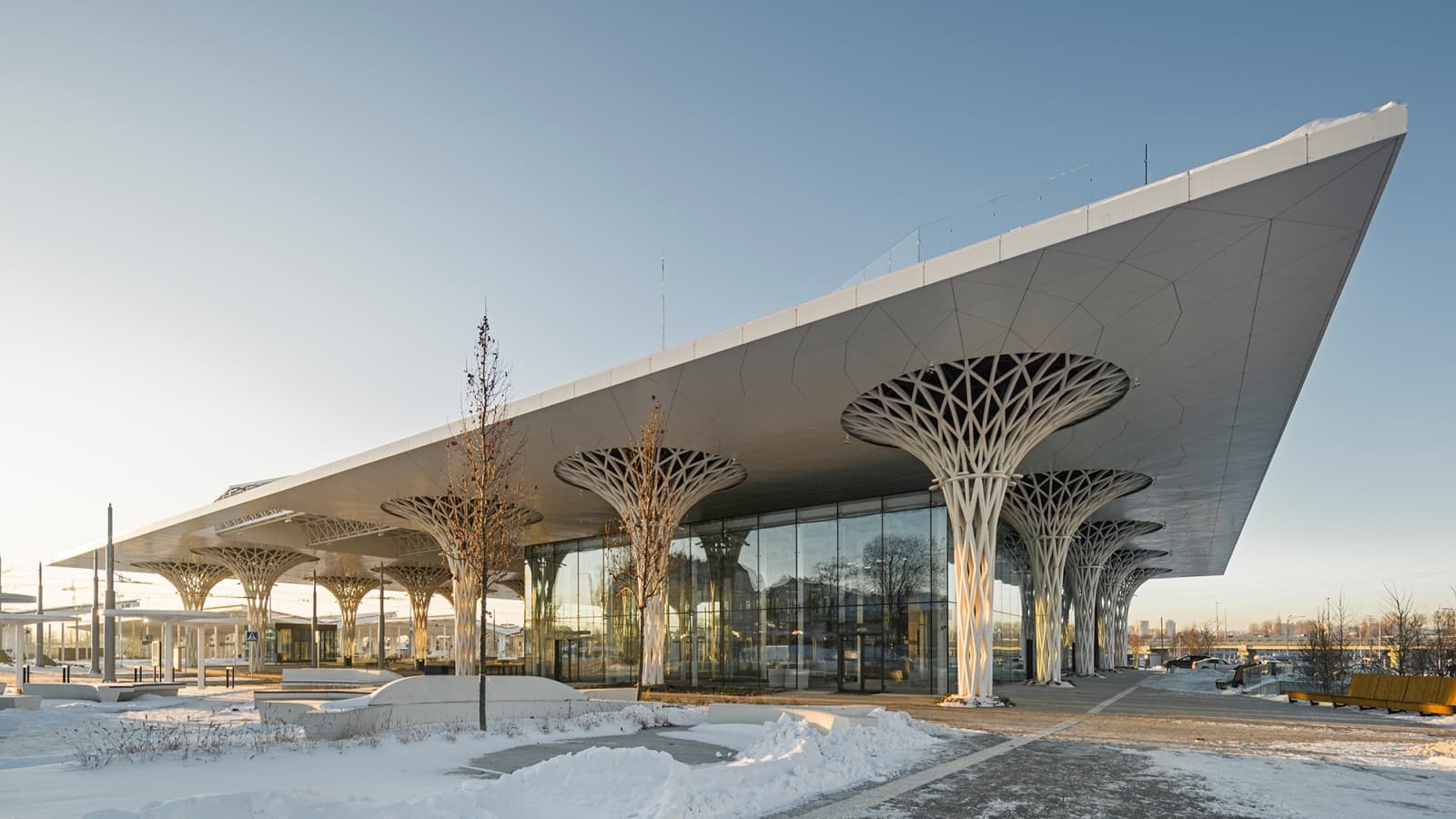
All kinds of traffic meet at the brand new railway station in the Polish metropolis of Lublin. The new architectural landmark not only fulfils its function, but is also built in an extremely environmentally friendly way - not least thanks to Geberit products.
The main railway station of a large city is usually a mobility centre where far more traffic circulates than just trains. The Polish city of Lublin, including its metropolitan region, is home to over 700,000 inhabitants. This density requires a high and flexible level of mobility. And this is where the new Lublin metropolitan railway station comes in.
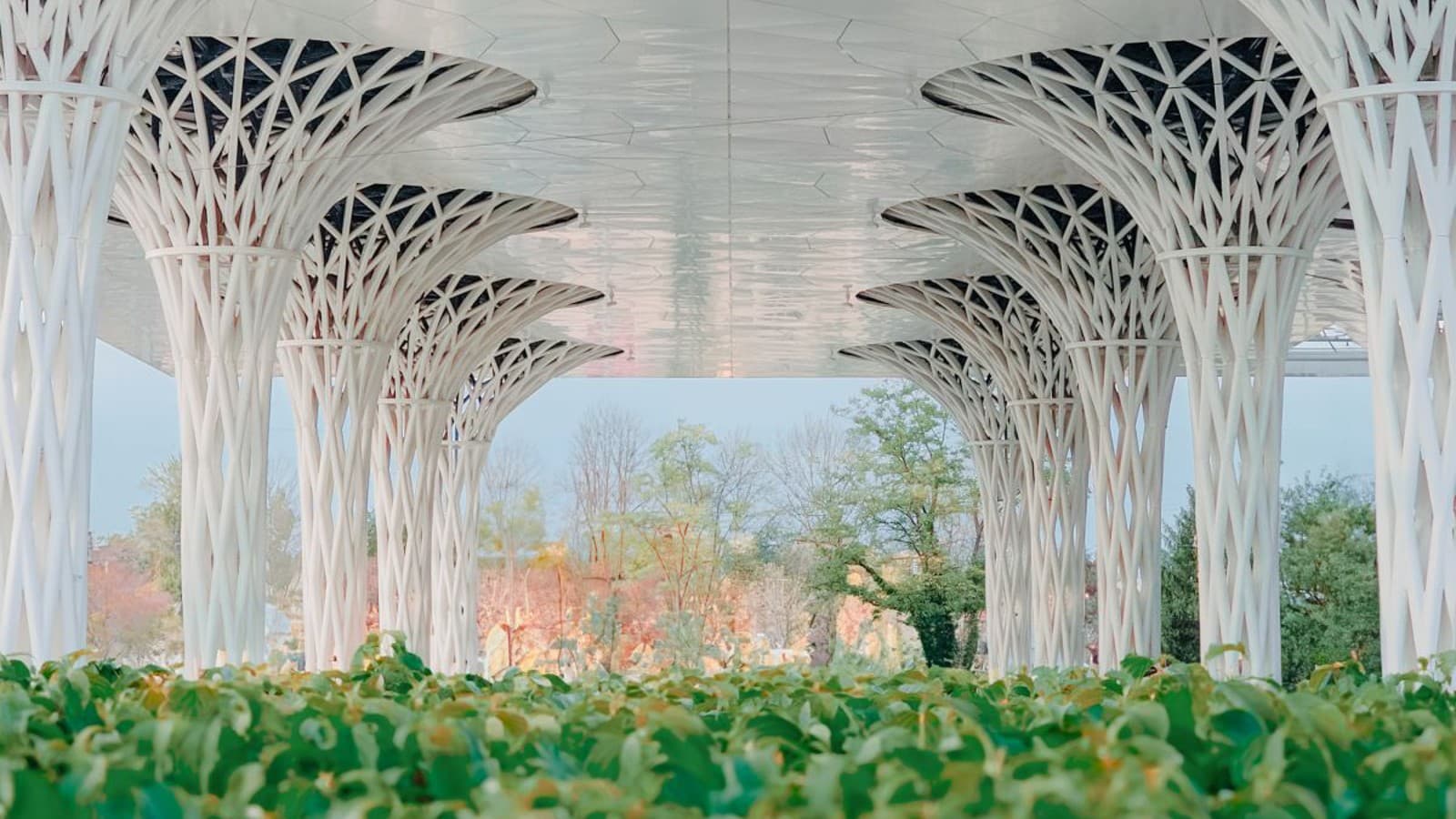
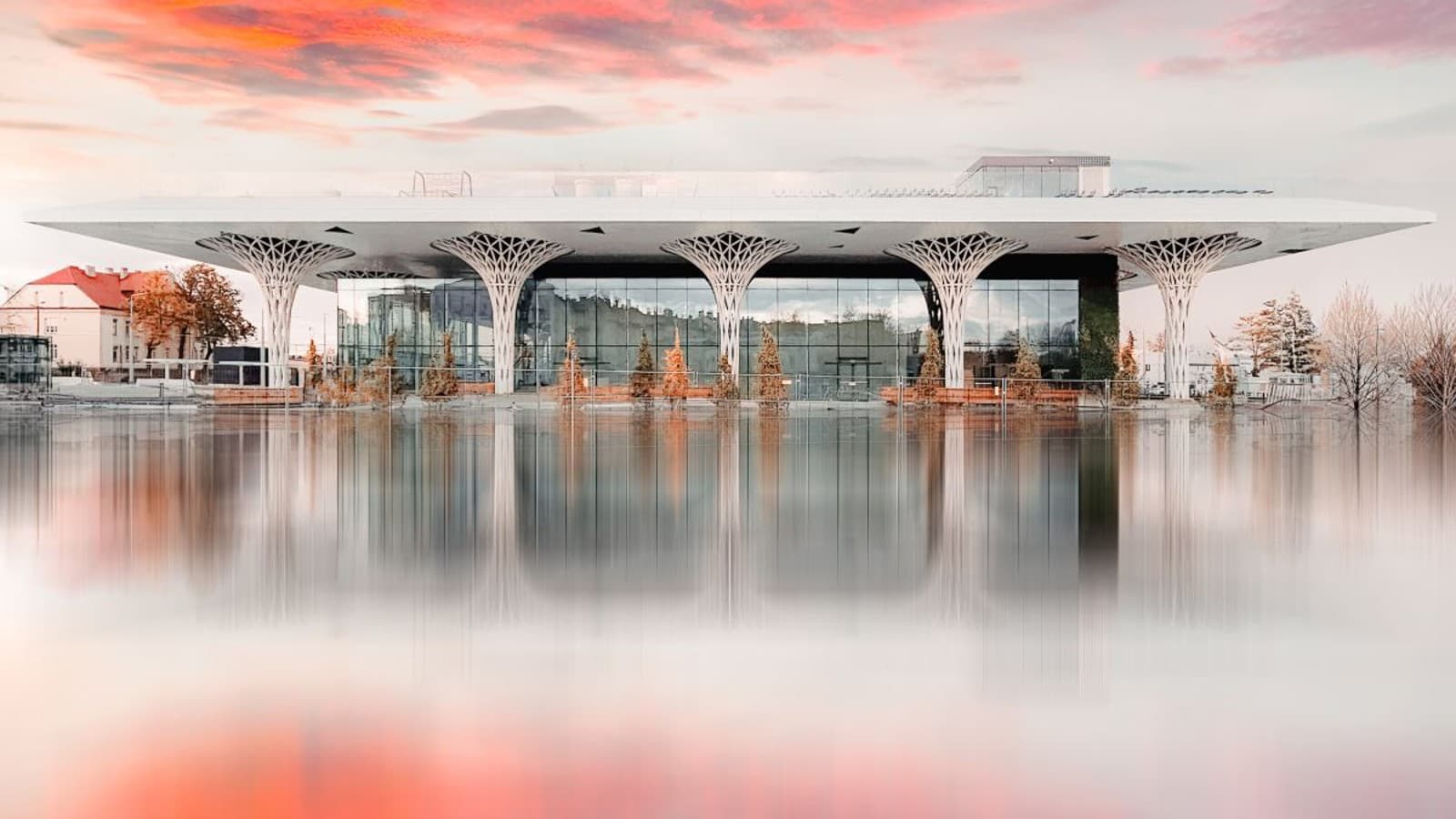
Local buses, rail transport, cycle traffic and taxis all meet at this station. This may sound complex, but the architectural solution is simple. Basically, the station is a single modernist block, supported by the only decorative element: the striking openwork columns.
Box-in-box for heating efficiency
They basically support the envelope, which is the roof. They are therefore also part of an ingenious ecological heating concept known as a box-in-box structure. A larger outer block - roof and columns - covers a second, smaller block. Only the smaller block is heated, but the construction also distributes the warmth in the outer area. This significantly reduces the heat output.
The building envelope is also ecologically valuable to a large extent. For example, an almost 300 m² vertical garden has been created along the outer wall of the building. The roof is also greened, as are the areas around the station.
The “grey water“, which is the rainwater from the roof, is used for the toilets and for maintaining the green areas.
Rainwater comes in via the Geberit system
To drain this rainwater efficiently, the planners chose the Geberit Pluvia roof drainage system. This draws the water from the roof using a vacuum and, thanks to its high performance, requires only a few downpipes. This saves material and creates design freedom for the architects.
With Geberit Smyle washbasins, public toilets are also equipped with Geberit products. Geberit washbasins ensure that the sanitary rooms are reliably and economically equipped and, thanks to their simple design, provide architects with a great deal of creative freedom.
Lublin's new railway station is therefore not only a new transport centre for the city, but also an architectural landmark with a high level of environmental compatibility.
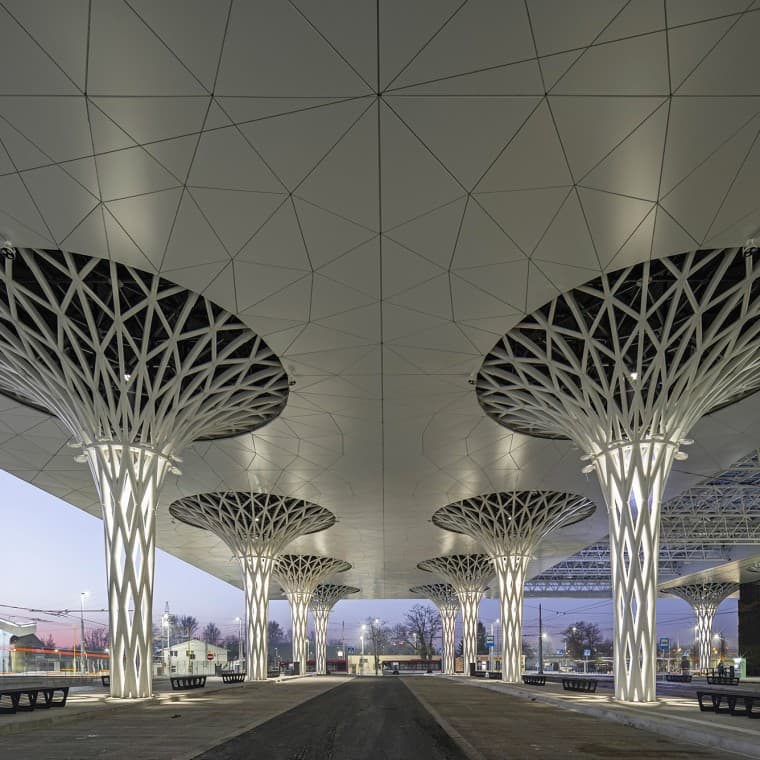
The openwork columns are a particular eye-catcher of the new building.

Local buses, rail traffic, bicycle traffic and taxis all converge at this station.

The rainwater from the roof is also used for the toilets.
Facts
Geberit Know-how
Geberit products used in the project
- Geberit Pluvia roof drainage
- Geberit Smyle washbasins

Geberit Pluvia
Geberit Pluvia는 사이포닉 지붕 배수 장치입니다. 신뢰할 수 있고 경제적이며 건축가에게 최대한의 설계 자유를 제공합니다.

Geberit Smyle
현대적인 디자인과 화려한 라인을 갖춘 Geberit Smyle 욕실 시리즈는 아늑하고 쾌적한 욕실 분위기를 조성하고 모든 욕실에 조화로움과 안락감을 선사합니다.
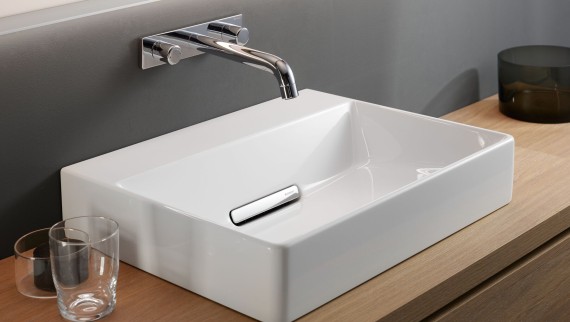
욕실 싱크
Geberit 세면기는 다양한 모양과 디자인으로 제공됩니다. 원형, 정사각형, 타원형, 손님용 화장실용 미니 핸드워시 세면기 등 고객 기호에 맞춰 드립니다.
Architects
Architects
- Client: Budimex
- Architect: Tremend Architecture Studio
- Opening: 2023
Subscribe to eView The Geberit newsletter for architects
Whether it’s spectacular hotels, skyscrapers, museums, residential buildings, or exclusive designer villas – innovative Geberit products and solutions are used in projects around the world.
In our eVIEW newsletter, we highlight the most exciting projects. Get inspired – and receive selected architectural highlights straight to your inbox three times a year.